How can a small, in-house design team make a greater impact on event promotion?
Free Library of Philadelpiha organization serves a diverse population of 1.5 million people by providing a robust lending library, digital resources, and special collections - and over 30,000 events and programs a year.
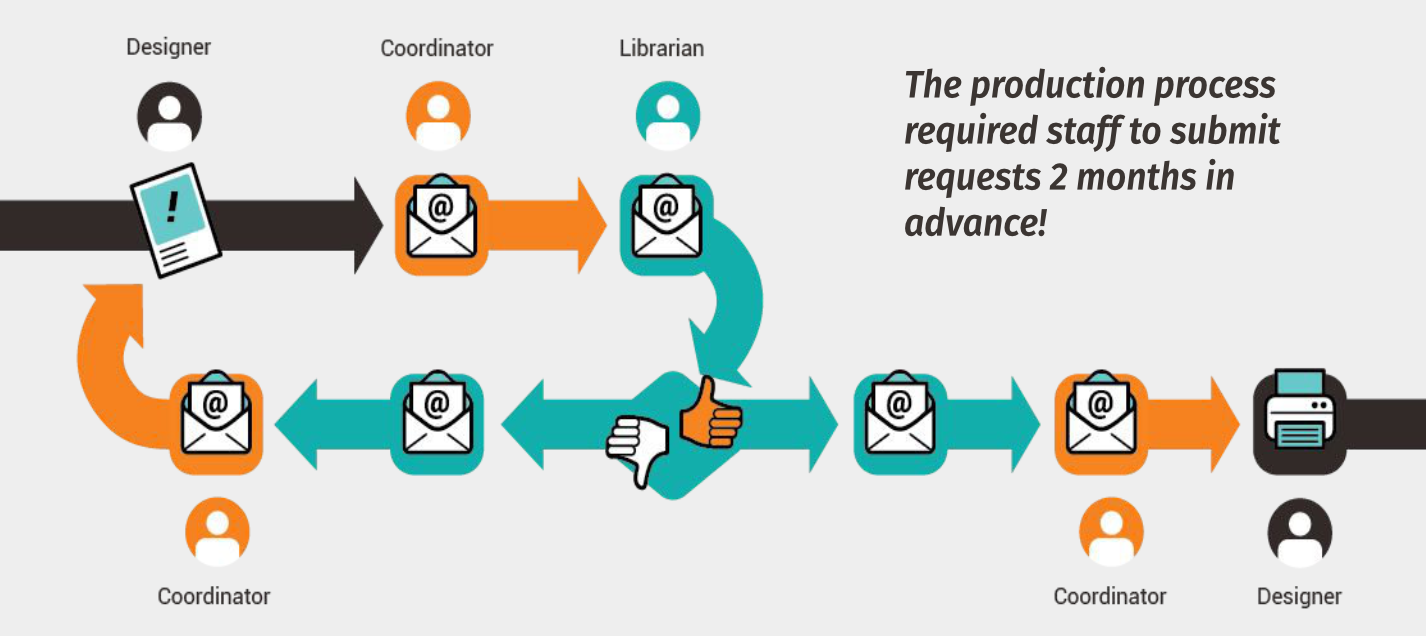
In FY 2018, the Design Studio helped promote 750+ programs a year, a far reach from teh 30,000+ that were held at branches across the city. The production process required staff to submit requests 2 months in advance.
My Role
Co-lead, Design
Collaborating closely with another co-leader, ***
Collaborators
- Co-Leader, Design Studio
Methods
- Surveying
- User Testing
- Workflow and Process Mapping
- Prototyping
Platform
Service Design
Current State
What we knew
As the head of the department, I had intimate knowledge of the internal processes. Materials took two to three weeks to get processed, pass through a backlog of projects, one week for the approval process and edits, and another week for print production and delivery.
Planning two months in advance was a real challenge for staff, who often created programming on an accelerated timeline.
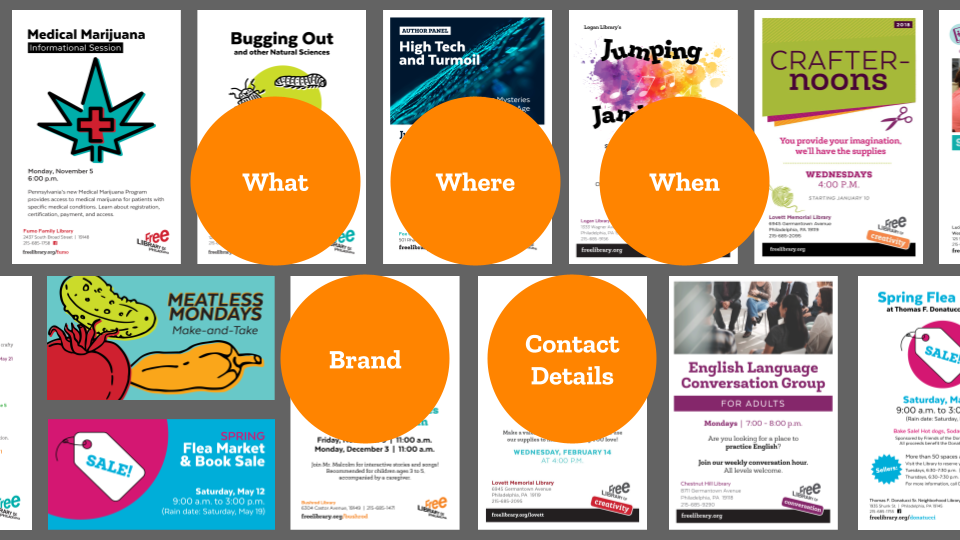
As a result, staff often went without print material for promotion or created fliers that compromised brand integrity and accessibility to some audiences.
We cannot rely on digital promotions.
While social media promotion has long been considered an attractive option for organizations with limited budgets, Philadelphia is a city with a huge digital divide. Sources suggest that about 30% of Philadelphia households were without internet in 2017, making us an organization that relies heavily on print.
Four people, 30,000+ events
The Free Library has an in-house Design Studio with two full-time designers and a Reprographics unit (akin to a Kinkos), with two full-time print-production staff.
The Design Studio was a critical resource for the library system.
The Reprographics unit offered one of the few means of color printing for the organization. Through 2017, these teams largely existed to support event promotion, seeing teh flier production process through from ideation, design, and production.
Key Research Findings
How did research shape the design?
Smaller formats preferred
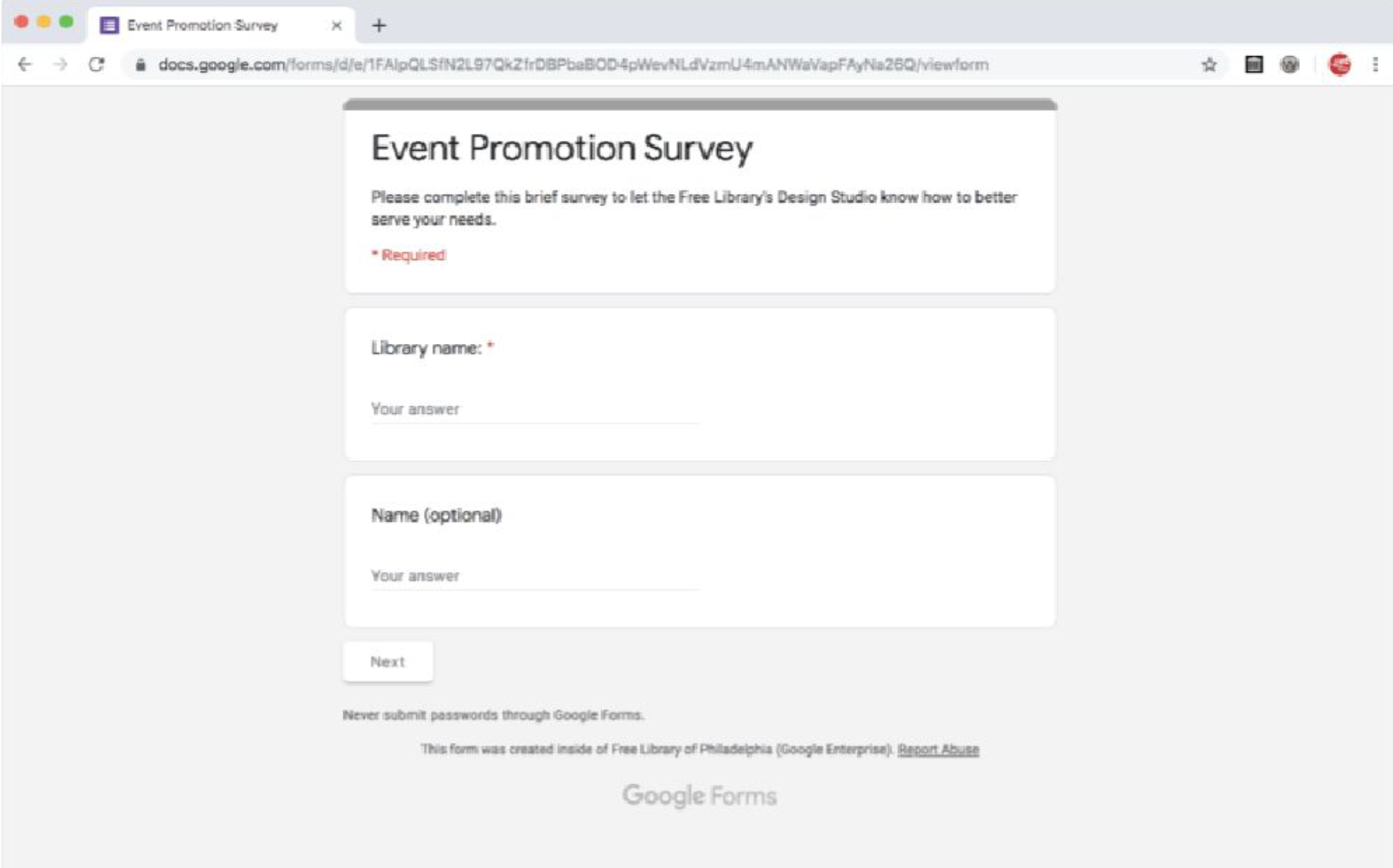
Surveying confirmed our understanding of how formats were used, but gave insight into why. Limited display space made smaller formats prefereable.
91% of staff promoted on social
While printed promotions were often emphasized by the city to ensure access to information, Libraries confirmed that they cross-promoted on social media.
Familiarity with many tools
We knew to succeed, we'd need little barrier to access to any tool. Surveying staff we learned that they had familiarity or willingness to learn new tools.
No budget for new tools
While tools such as Canva were popular, there was zero additional budget to devote to new tools and no bandwidth from the IT teams to support implementation.
Value Definition
What defines success?
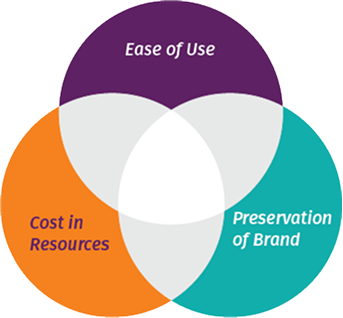
We identified three core criteria for success representing non-negotiable interests of major stakeholders and users: ease of use, preservation of brand, and cost in resources which represented both money and time spent by enablers of the service.
Feedback & Design
What does an MVP look like?
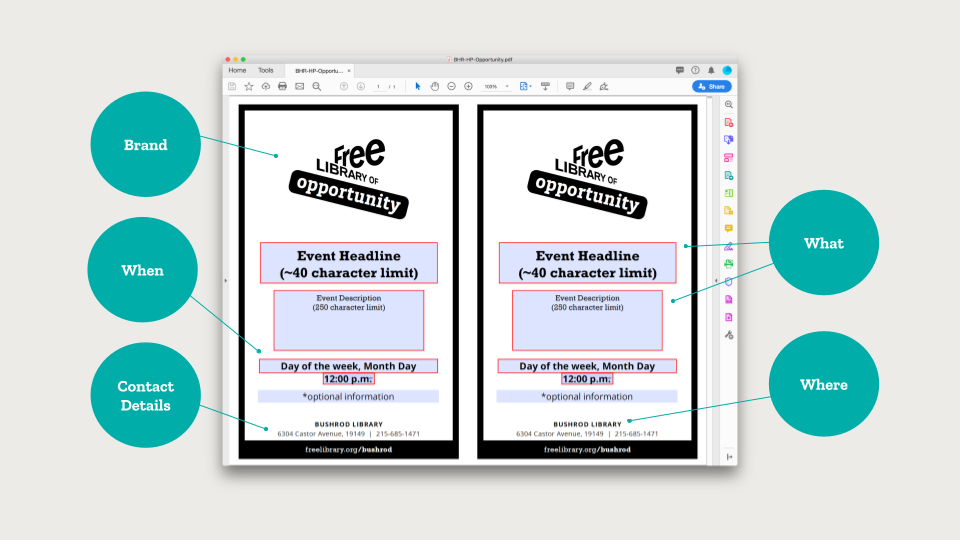
We developed an initial template solution and tested internally, then with our Coordinators, before releaseing to all creators.
Since the design team worked on Macs, we emulated staff PC work environments. We discovered staff could not install fonts due to restrictions on machines and our official brand fonts were also restricted from use in the forms which required pivoting to designs that made use of similar alternatives.
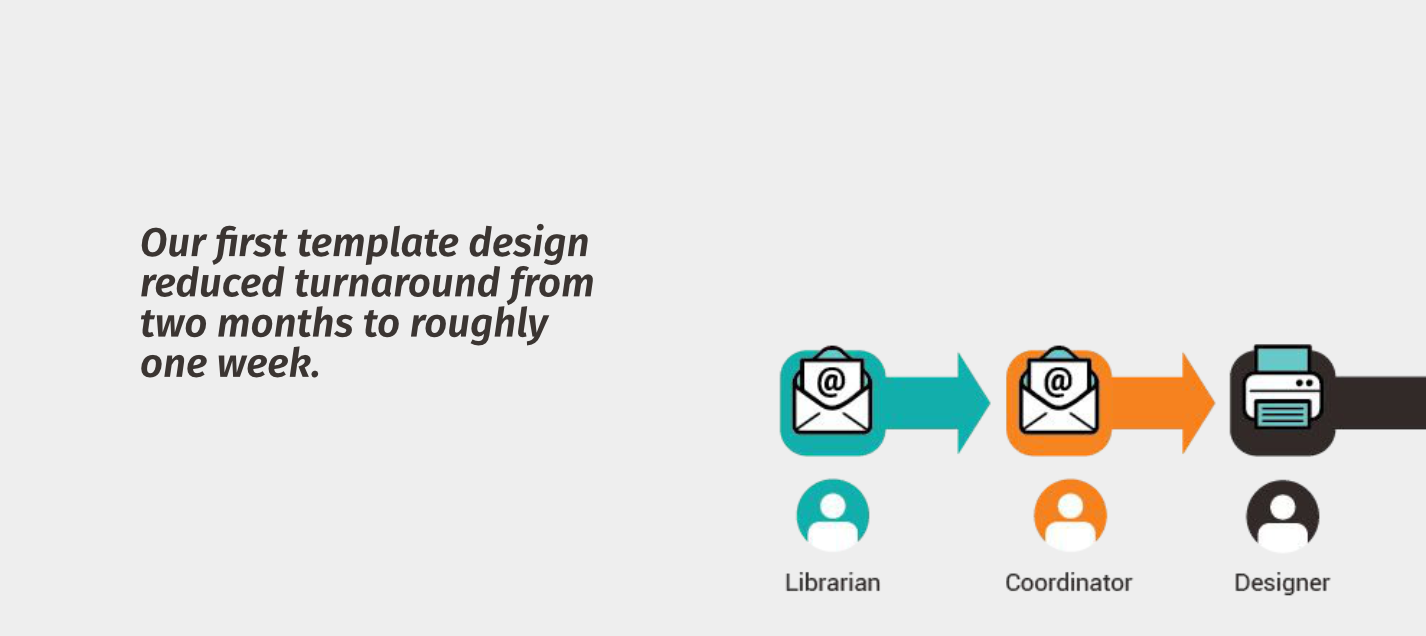
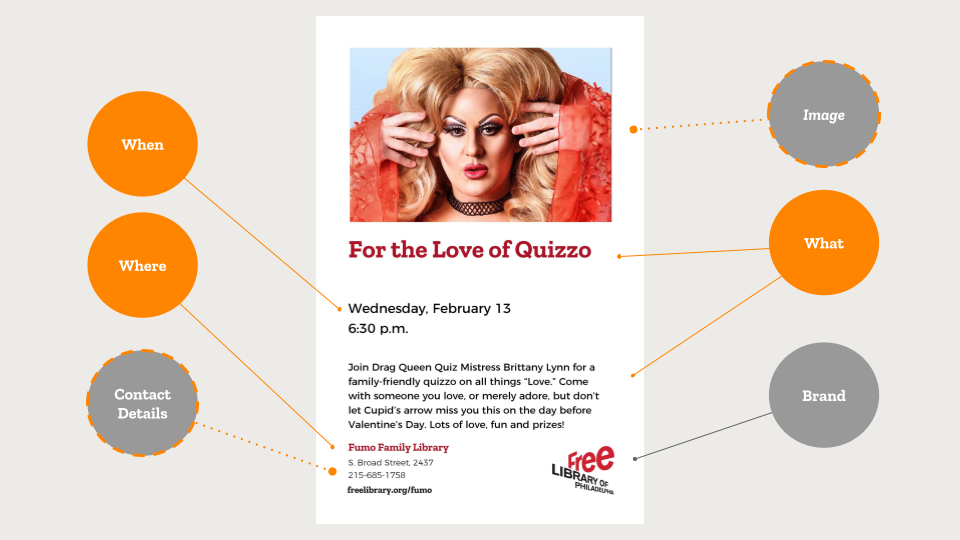
Initial release reduced turnaround for print amteraisl from two months to roughly a week. Staff expressed they were greatly relieved, but further feedback still revealed that the text-only fliers did not offer the same apeal or value as fliers designed with images.
Design Iteration
How might we improve?
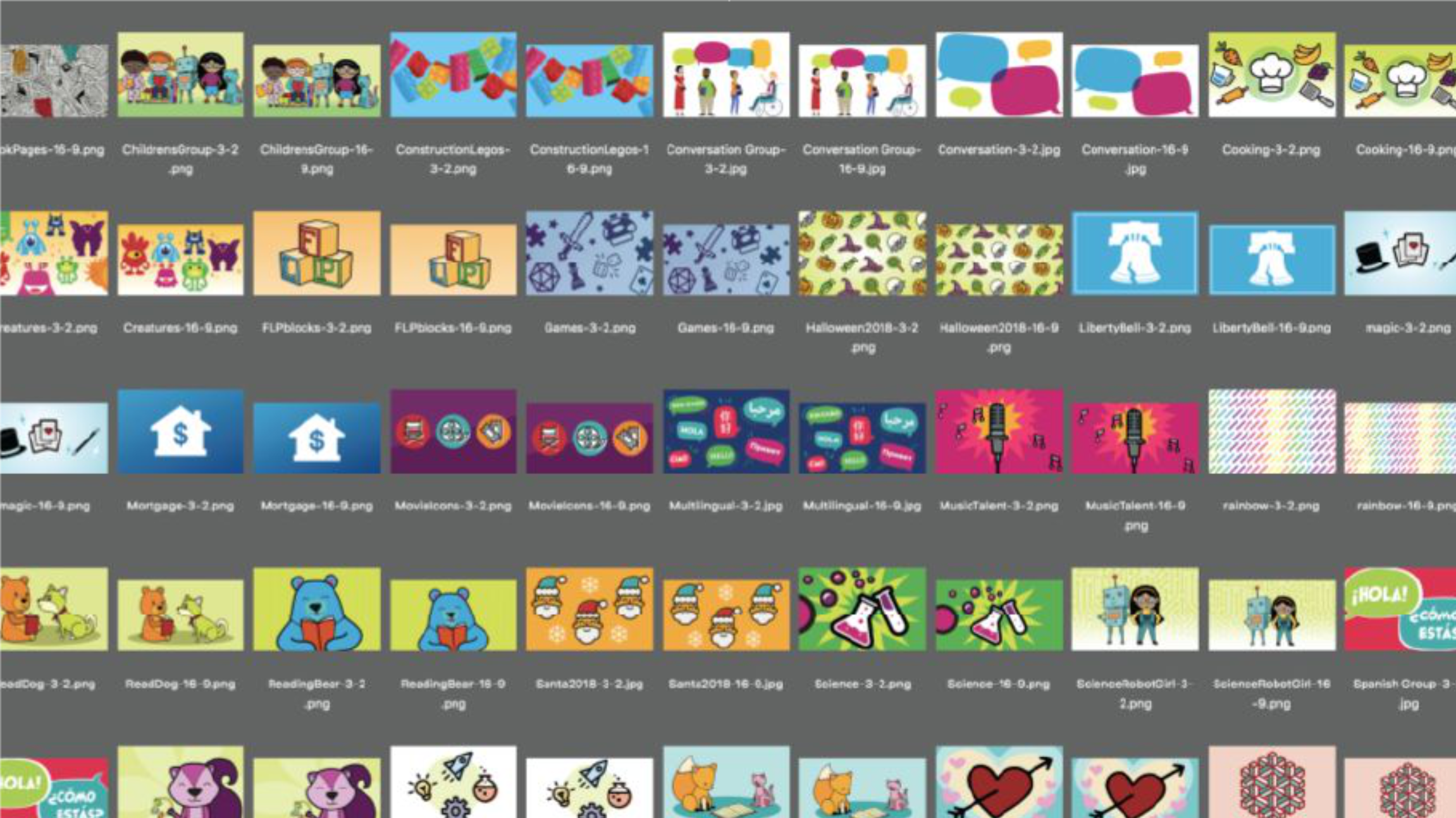
We continued testing solutions that might allow custom images, but these were not reliable or user-friendly. In XXX, however, Adobe released a new feature that enabled image fields.
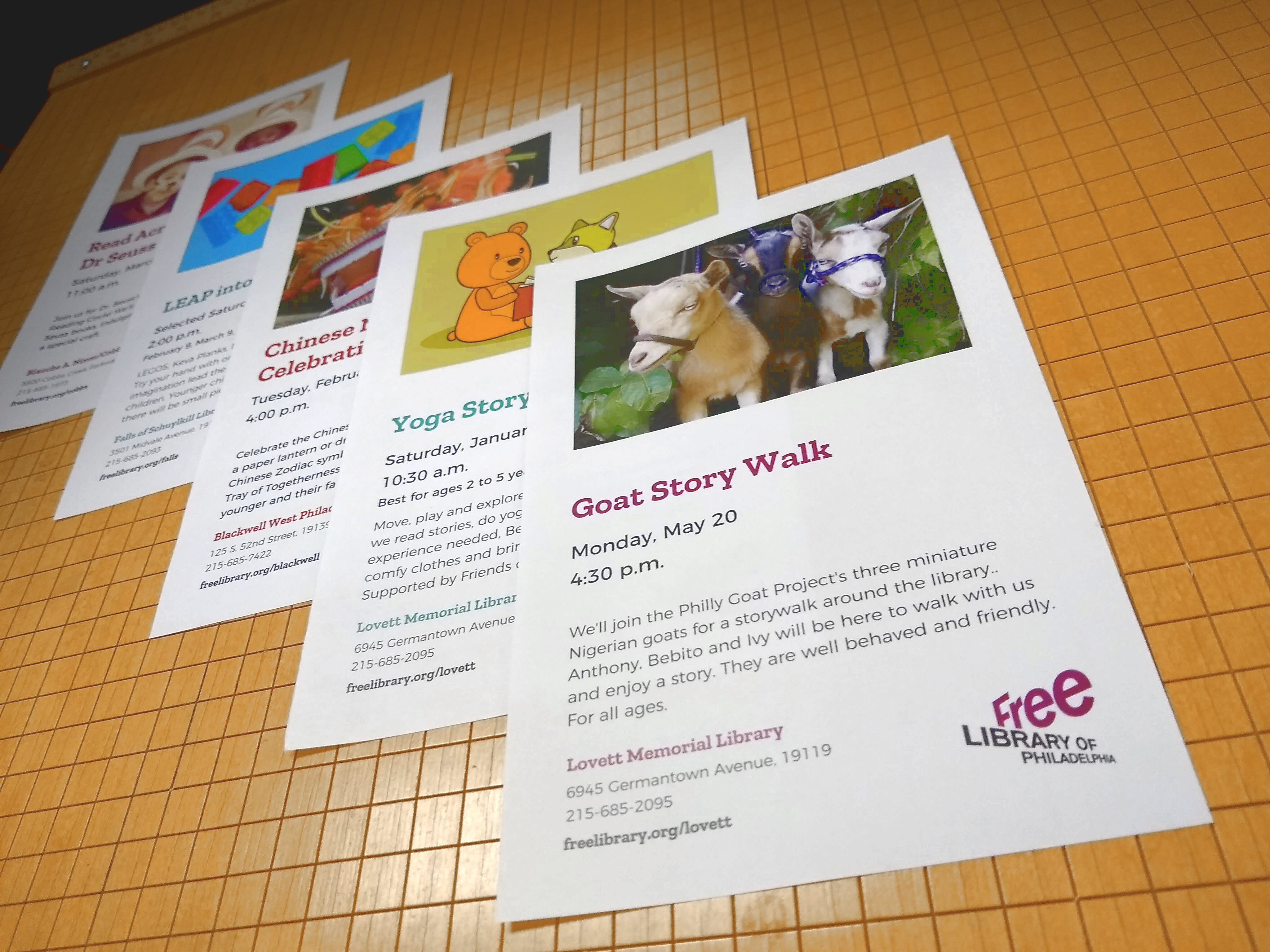
Lessons from our initial release helped us further finesse our solution. We traded perfectly formatted address lines in static text for dropdowns and open text fields. This reduced the number of files the department and coordinators would need to maintain from 270 to 4.
Results & Achievements
What changed because of this?
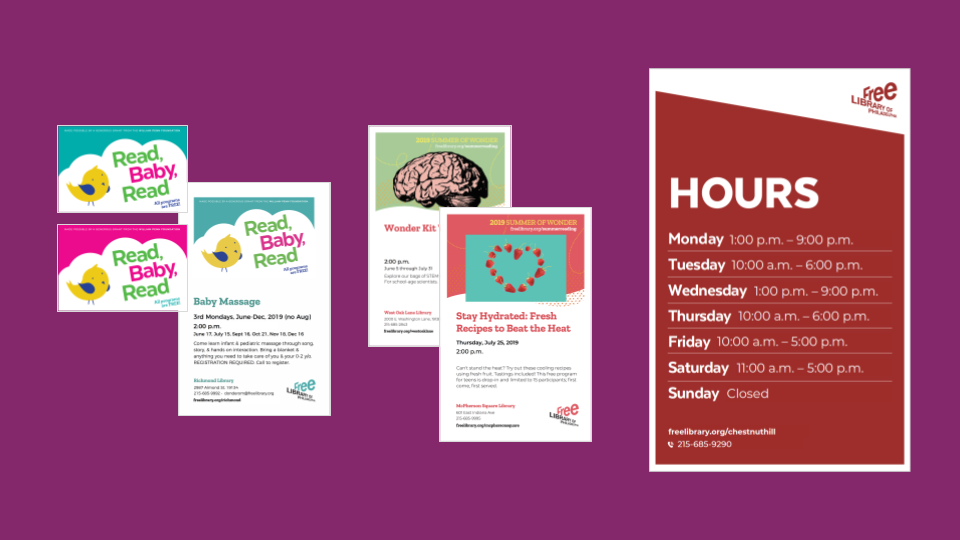
Our templating efforts have evolved and continue to take new forms. We now develop and distribute one custom asset for a systemwide program rather than hundreds of unique flyers.
The method used to create flier templates has been applied to other print material and signs for libraries, empowering librarians to accommodate patron signage needs quickly and to bring awareness to meaningful events in their spaces.
In one month, the department produced 130 templated fliers, supplying about 6 programs with printed material a day. Our Print Production team who had previously seen many of their projects being outsourced now has had their volume of work nearly double.
Want to learn more about this project?
Contact me:
kristy.graybill @ gmail.com